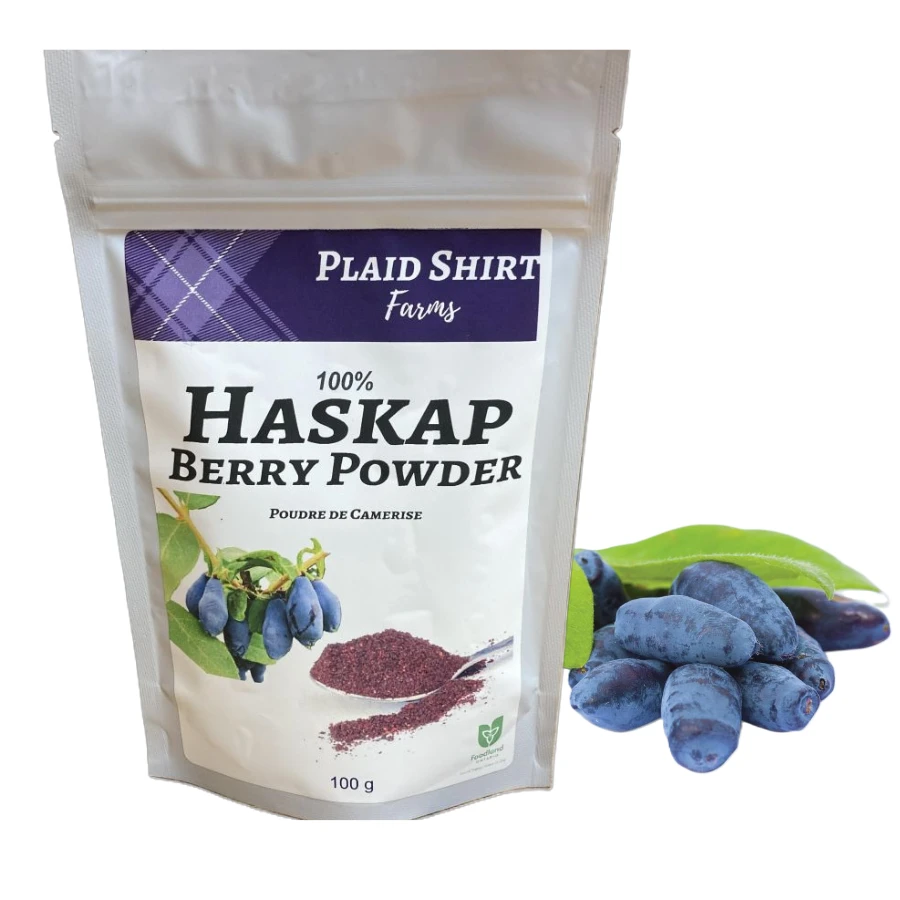
New product – Haskap Berry Powder
Made with Haskaps grown on our farm
Our Haskaps were harvested at their peak condition, washed and graded before being professionally dried and ground.
The resulting powder was then tested by an accredited lab for anthocyanin and anti-oxidant levels.
The results: Haskap Berry Powder is a natural source of anthocyanins, especially Cyanidin-3-Glucoside (C3G), soluble and insoluble Proanthocyandins (PAC’s)as well as Gallic Acid and exhibit significant antioxidant, antidiabetic, anti-inflammatory, and cytoprotective effects against various oxidative stress-induced disorders.
Haskap Berry Powder has potent antioxidant, anti-inflammatory, and anti-microbial properties.
How to use Haskap Berry Powder
Unlike some Haskap powders, Plaid Shirt Farms’ Haskap Berry Powder is made with the whole berry and as such, contains fiber. (There’s health benefits in that fiber like supporting gut health and boosting immunity by acting like prebiotics.)
Dissolved in water it will have a gritty texture so we suggest using the powder as an additive to smoothies, yoghurt, as a baking ingredient, mix with your cereal or compliment your protein powders.
A half teaspoon a day is all it takes!
Potential health benefits and research
| Heart Health: These compounds are known to improve cardiovascular health by enhancing blood vessel flexibility, reducing arterial stiffness, and lowering blood pressure. This, in turn, reduces the risk of heart disease. Improved Circulation: They aid in maintaining healthy blood flow by preventing platelets from sticking together and forming harmful clots. This is particularly beneficial in preventing strokes and heart attacks. Eye Health: Some studies suggest they might help protect against eye diseases like cataracts and macular degeneration due to their ability to strengthen capillaries and improve blood flow within the eyes. UTI Prevention: Soluble proanthocyanidins (PACs) found in sources like haskaps and cranberries are clinically proven to help prevent urinary tract infections (UTIs) by preventing bacteria from adhering to cell walls, particularly at doses of at least 36mg daily. Immune System Support: Proanthocyanidins can influence the immune response by modulating the activity and production of certain types of immune cells, enhancing the body’s ability to fight infections and diseases. Anti-Inflammatory Effects: Their anti-inflammatory properties can help alleviate symptoms of inflammatory conditions such as arthritis, possibly providing pain relief and improving joint function. Improved Insulin Sensitivity: Proanthocyanidins may enhance the body’s sensitivity to insulin, the hormone responsible for helping cells absorb glucose from the bloodstream. Improved insulin sensitivity means that the body can more effectively use insulin to lower blood sugar levels. Cognitive Support: Studies in animal models show that C3G can improve learning and memory and protect against neurodegeneration by reducing protein deposits and other markers of brain pathology Antioxidant Action: At their core, proanthocyanidins neutralize free radicals—unstable molecules that can cause cellular damage. By scavenging these free radicals, they help protect cells from oxidative stress, which is linked to chronic diseases and aging. Please be aware: Proanthocyanidins, found naturally in foods like grapes, apples, berries, and certain nuts, are generally safe when consumed as part of a balanced diet. However, like any substance, they might have potential side effects or interactions, especially in concentrated supplement form. Here’s what you should know: Digestive Issues: Some people may experience mild gastrointestinal disturbances such as nausea, stomach upset, or diarrhea, particularly when taking high doses of supplements. Allergic Reactions: Though rare, individuals with allergies to certain foods containing proanthocyanidins (like grapes or berries) could experience allergic reactions. Symptoms might include itching, swelling, or respiratory issues. Potential Drug Interactions: Proanthocyanidins might interact with certain medications, such as blood thinners (e.g., warfarin) or anti-inflammatory drugs. They could enhance the effects of these medications, leading to an increased risk of bleeding or bruising. Effects on Iron Absorption: Like other polyphenols, proanthocyanidins might inhibit the absorption of non-heme iron (the type of iron found in plant foods) if consumed in large amounts, which could be a concern for individuals with iron deficiency anemia. Uncertain Long-term Effects: While short-term use in typical dietary amounts is generally considered safe, the long-term effects of taking high doses through supplements are not well-studied and thus not entirely understood. For most people, consuming proanthocyanidins through a diet rich in fruits, vegetables, nuts, and seeds poses little risk and offers numerous health benefits. If you consider taking supplements, particularly if you have underlying health conditions or are on medication, it’s wise to consult a healthcare professional to ensure safety. |